Meme coin trading versus holding as the better path for most traders because speed and risk control decide the outcome
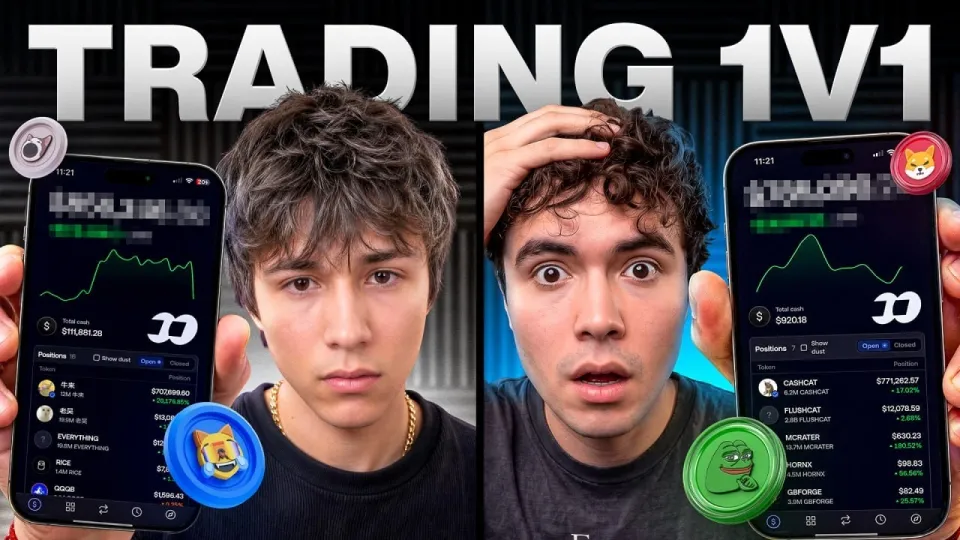
Video: I Challenged A Pro Memecoin Trader (Who Won?)
Want articles like this for your own video to promote it on YouTube and Google? Order them through the Telegram bot @sat_sit_bot. Articles with your video embedded are written and posted by the bot itself — on popular topical sites (no ads). Try it free: 50 articles on us.
· based on the channel insentos
Key takeaways
- Meme coins have no cash flow or earnings, so price is driven almost entirely by attention, liquidity and holder behaviour.
- Active meme coin trading with predefined exits usually beats holding because most tokens lose value after the initial hype wave.
- Position sizing of 1–5% of the portfolio per trade keeps a string of losses survivable on high-volatility Solana and Ethereum launches.
- Slippage and fees on thin pools can quietly eat 5–20% of a trade, so liquidity checks come before any entry.
- The insentos challenge video pairs an experienced guest with live trading, showing that process and risk rules matter more than picks.
Meme coin trading is the better choice than simply holding for most participants, because these tokens rarely have fundamentals to fall back on and the bulk of their value appears and disappears within days. Holding a meme coin means betting that attention will keep growing after you buy; trading it means defining an exit before you enter. That single difference in process explains why disciplined traders survive several cycles while buy-and-hold buyers usually round-trip their gains. The insentos challenge video, where a guest trader works through live positions while explaining his reasoning, is a useful illustration of that process-first approach, and the platform link shared by the channel — registration and bonus via fomo.family — is where much of that live workflow starts.
What a meme coin actually is and why it behaves differently
A meme coin is a cryptocurrency whose value rests on community, narrative and virality rather than on revenue, cash flow or a product roadmap. That has three practical consequences for anyone trading it.
- There is no valuation floor. A token with no earnings cannot be "cheap" or "expensive" in any measurable sense, so classic fundamental analysis does not apply.
- Supply is usually concentrated. A small number of wallets often hold a large share of the float, which means a single seller can move the price sharply.
- Liquidity is thin and reflexive. On Solana and Ethereum launchpads, pools can start with a few thousand dollars of liquidity, so price impact on your own order is a real cost, not a detail.
Because of these traits, meme coin prices are best read as a measure of attention flow. When the flow stops, price does not drift down gently; it gaps. That is the core argument for treating these assets as trading instruments with a time limit rather than as long-term holdings.
Why active meme coin trading beats holding for most people
Active trading wins on expected outcome because it converts an open-ended bet into a defined one. A holder has one decision — buy — and then hopes. A trader has three: entry, size and exit, and each can be capped.
- Defined downside. With a hard stop at a set percentage, the worst case is known before the trade. Holding through a 70% drawdown is common in this niche; a 20% stop is not.
- Capital recycling. Meme coin cycles are short. Money locked in a stalled token cannot be redeployed into a fresh launch with real volume.
- Feedback. Trading forces you to record entries, exits and outcomes, which produces data you can improve. Holding produces only a feeling.
- Attention decay. Most tokens peak in the first days after launch. Holding past that peak means competing against sellers who bought earlier and cheaper.
The counterargument is real: trading costs money in fees, slippage and mistakes, and beginners often lose more by overtrading than by holding. The honest answer is that trading is better only when it comes with rules — otherwise it is simply faster gambling.
The mechanics of a meme coin trade from entry to exit
A repeatable meme coin trading routine has five steps, and skipping any of them is where most losses originate.
- Check the contract and holders. Look for mint authority, freeze authority, and whether top wallets are clustered. On Solana tools such as Axiom (https://axiom.trade/) surface holder distribution and dev wallet history next to the chart.
- Measure liquidity before size. Compare pool depth with the amount you intend to trade. If your order is more than roughly 1% of the pool, expect visible slippage on both entry and exit.
- Set position size first. A common rule among active traders is 1–5% of the portfolio per position, so ten consecutive losses still leave the account functional.
- Define exit levels in advance. Take partial profit at the first target, move the stop to breakeven, and accept that the remainder may go to zero. Deciding this after entry is how winners turn into losers.
- Log the trade. Entry, exit, reason, and result. Twenty logged trades tell you more about your edge than two hundred unlogged ones.
The guest in the insentos challenge is notable for narrating his reasoning while positions are open, including why he is sizing one trade smaller than another. That habit — explaining the decision out loud — is the cheapest risk control available.
Position sizing and risk rules that keep a meme coin account alive
Survival in meme coin trading is a math problem before it is a picking problem. If you risk 25% of the account per trade, four bad trades end the experiment regardless of skill. If you risk 2%, you can be wrong twenty times and still trade.
A workable framework for a small account:
- Risk no more than 1–2% of total capital on a single token, measured to the stop, not to the position size.
- Cap the number of open meme coin positions at three to five, because correlated launches fall together.
- Keep a stablecoin reserve of at least 30% so that a good setup never finds you fully invested.
- Predefine a daily loss limit — often 5–10% of the account — and stop when it is hit.
- Treat gas and priority fees as part of the risk budget; on busy Solana days these can exceed the intended profit on a small scalp.
These numbers are not magic, but the principle is: the size of the loss must be decided before the trade, not discovered after it.
Common questions and doubts from new meme coin traders
Beginners tend to raise the same handful of concerns, and they deserve direct answers.
"Do professional traders actually make money, or is it just luck?" Both, in sequence. Luck determines any single trade; process determines the sample. A trader with a defined stop and a 1.5-to-1 reward ratio can be wrong half the time and still finish ahead. Someone without stops can be right nine times and lose everything on the tenth.
"Isn't it easier if you have a large following?" Having an audience is an advantage in distribution, not in execution. It also creates obligations and scrutiny that slow decisions down. The skills that transfer to a small account are chart reading, liquidity assessment and sizing — none of which require followers.
"Where do I find communities and calls?" Many groups advertise heavily and then gate access behind paid tiers, which is a fair criticism raised by viewers of challenge-style videos. Treat any call as a research lead, never as a signal to copy at market.
"How much capital do I need to start?" Enough to trade at a size where fees and slippage are small relative to the position, and little enough that a total loss is irrelevant to your finances. For most people that is a few hundred dollars, not a few thousand.
Mistakes that turn meme coin trading into gambling
The most expensive errors in meme coin trading are behavioural, not analytical. Chasing a token after a vertical candle, averaging down into a token whose liquidity is draining, and holding a losing position because "the community is strong" are the three classic ways an account dies.
Two more deserve mention. First, ignoring the exit before the entry: if you cannot state the price at which you sell, you do not have a trade. Second, copying a large account's entry without their size, timeline or exit — by the time a public post appears, the move it describes is often already priced in. The insentos format, where the reasoning is shown live rather than summarised afterwards, is valuable precisely because it exposes the hesitation and the second-guessing that a highlight reel would cut out.
Useful links
- fomo.family registration and bonus
- Axiom trading terminal
- insentos on X
- insentos on Instagram
- insentos on TikTok
The verdict on meme coin trading versus holding
Meme coin trading is the better default because it forces explicit risk limits onto an asset class that offers no fundamental safety net, while holding leaves the outcome to attention flows you cannot control. That advantage only materialises with position sizing, predefined exits and logged trades; without them, trading is just a faster way to lose. The insentos challenge video is worth watching as a demonstration of process under live conditions rather than as a source of picks, and the channel's fomo.family link is the entry point it points viewers toward. Start small, keep records, and judge yourself on twenty trades rather than one.
Questions & answers
Is meme coin trading more profitable than just holding a token?
For most participants, yes, because trading caps the downside with a predefined stop while holding leaves the full drawdown open. The advantage depends on execution: without position sizing and recorded trades, active trading usually produces worse results than doing nothing.
How much of my portfolio should go into a single meme coin?
A common rule is 1–5% of total capital per position, with the risk measured to the stop rather than to the full position size. Keeping at least 30% in stablecoins also means a good setup never finds you fully invested.
Do I need a paid group or signals to trade meme coins?
No. Paid groups are useful as research leads but not as copy-trade instructions, since you rarely share the same entry, size or exit as the person posting. Chart reading, liquidity checks and sizing rules are the skills that actually transfer.
What is the biggest beginner mistake in meme coin trading?
Entering without a defined exit. If you cannot state the price at which you sell before you buy, you are not trading a plan but reacting to the chart, and that is where most losses in this niche originate.
Source: I Challenged A Pro Memecoin Trader (Who Won?) · Markdown version